


Blog
Why Digital Marketing Is No Longer Optional for Businesses

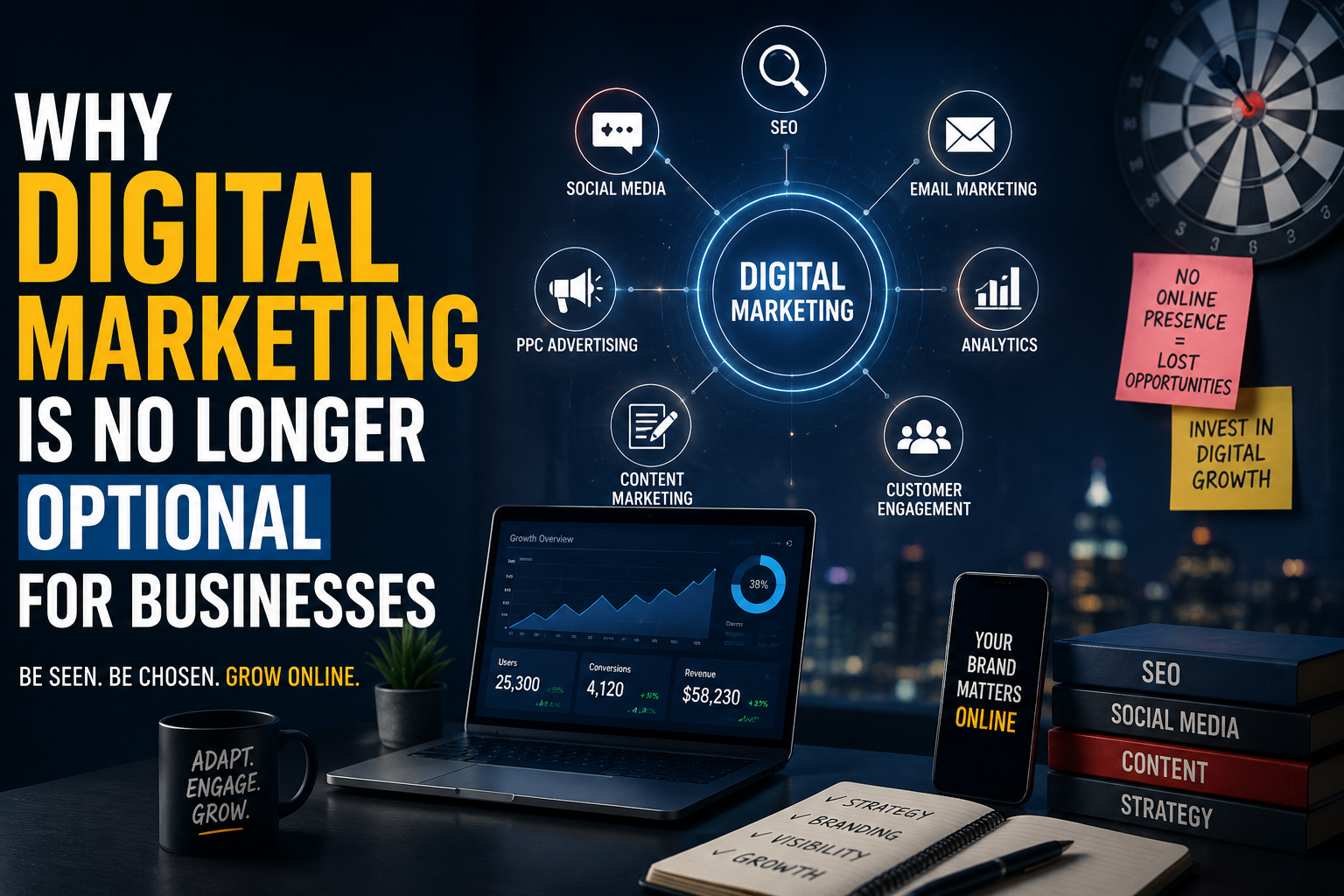
Why Digital Marketing Is No Longer Optional for Businesses
The Business World Has Shifted Online
The way customers discover, research, and interact with brands has completely changed over the last few years. Today, most buying journeys begin online, whether someone is searching for a product, comparing services, reading reviews, or checking social media presence before making a decision. This shift has made digital marketing one of the most important growth drivers for modern businesses.
A company without a strong digital presence now struggles to compete, even if its products or services are excellent. Customers expect businesses to have a professional website, active social media platforms, search engine visibility, and fast communication channels. Businesses that ignore these expectations often lose potential customers to competitors that invest in online marketing strategies.
Digital marketing is no longer limited to large enterprises. Small businesses, startups, local brands, and service providers are now using SEO services, social media marketing, performance marketing, PPC advertising, and content marketing to generate leads and improve customer engagement.
Customers Search Online Before Making Decisions
Consumer behavior has evolved significantly. Before purchasing a product or contacting a company, people usually search online first. They compare prices, read customer reviews, visit websites, explore Instagram pages, and even watch videos before making decisions.
This is why search engine optimization, Google Ads management, local SEO services, and social media advertising have become essential for businesses. If your company does not appear in search results, customers may never even discover your brand.
For example, when someone searches for “best CRM software company,” “website development services,” or “digital marketing agency near me,” businesses with strong SEO strategies and optimized online visibility gain the advantage. Companies that invest in keyword targeting, content optimization, and search engine ranking are more likely to attract high-intent customers.
Digital visibility directly impacts trust. A professionally designed website with quality content, fast loading speed, and optimized user experience creates credibility and improves conversion rates.
Digital Marketing Delivers Measurable Results
One of the biggest advantages of digital marketing is the ability to track and measure performance in real time. Traditional advertising methods often make it difficult to understand what is actually working. Digital marketing provides detailed analytics that help businesses make smarter decisions.
With tools like Google Analytics, Meta Ads Manager, CRM systems, and marketing automation software, businesses can monitor website traffic, lead generation performance, conversion rates, and customer behavior.
Performance marketing campaigns allow companies to optimize budgets based on real results. Instead of spending money blindly, businesses can focus on strategies that generate qualified leads and sales.
Services like Facebook Ads, Instagram marketing, LinkedIn marketing, PPC campaigns, email marketing automation, and conversion rate optimization help businesses improve ROI while targeting the right audience.
This level of precision makes digital marketing far more scalable and cost-effective compared to many traditional advertising methods.
Social Media Has Become a Business Necessity
Social media platforms are no longer used only for entertainment. They have become powerful business tools that influence purchasing decisions, customer trust, and brand perception.
Platforms like Instagram, LinkedIn, Facebook, YouTube, and X allow businesses to connect directly with their audience. Companies now use social media marketing strategies to build communities, generate engagement, run advertising campaigns, and increase brand awareness.
A strong social media presence also improves credibility. Customers often judge a business based on how active and professional its online presence looks. Brands that consistently share valuable content, educational posts, customer success stories, and industry insights usually build stronger trust.
Short-form video marketing, influencer collaborations, content strategy development, and audience engagement campaigns are becoming increasingly important in modern digital branding.
Businesses that fail to adapt to these trends risk becoming invisible in a highly competitive digital environment.
SEO Has Become Critical for Long-Term Growth
Search engine optimization plays a major role in sustainable business growth. Paid advertising can generate quick traffic, but SEO helps businesses build long-term visibility and organic lead generation.
When businesses invest in SEO optimization services, technical SEO audits, keyword research, on-page SEO, and content marketing strategies, they improve their chances of ranking higher on Google.
Organic traffic is extremely valuable because it attracts users who are actively searching for products or services. These visitors often have higher purchase intent compared to random audiences reached through traditional advertising.
For example, ranking for keywords like “best software development company,” “CRM implementation services,” “mobile app development agency,” or “digital marketing solutions” can bring consistent inbound leads.
SEO also improves website authority, user experience, and overall online credibility. Businesses that consistently publish informative blog content and optimize their websites gain a strong competitive advantage over time.
Customers Expect Personalized Experiences
Modern customers expect businesses to understand their needs and provide personalized experiences. Generic marketing is becoming less effective because consumers now prefer relevant communication and targeted recommendations.
Digital marketing tools allow businesses to personalize campaigns based on customer behavior, interests, demographics, and previous interactions.
Email marketing campaigns, customer relationship management systems, marketing automation platforms, and AI-powered analytics help companies create highly targeted marketing strategies.
Businesses can now send personalized offers, automate follow-up sequences, nurture leads, and improve customer retention through smart automation workflows.
This level of personalization improves customer satisfaction while increasing conversion rates and long-term loyalty.
Digital Marketing Helps Small Businesses Compete
One of the biggest misconceptions is that digital marketing only benefits large companies with huge budgets. In reality, digital platforms have created opportunities for smaller businesses to compete more effectively.
A well-executed SEO strategy, strong website design, engaging social media content, and targeted paid advertising can help small businesses reach highly relevant audiences without massive investments.
Local businesses can benefit from Google Business Profile optimization, local SEO marketing, reputation management, and geo-targeted advertising campaigns.
Even startups can generate quality leads through content marketing, LinkedIn outreach, email campaigns, and performance advertising.
Digital marketing has leveled the playing field by giving businesses of all sizes access to scalable growth opportunities.
AI and Automation Are Reshaping Marketing
Artificial intelligence and automation are transforming the digital marketing industry. Businesses are now using AI-driven tools for customer support, predictive analytics, personalized recommendations, content generation, and marketing automation.
Chatbots, automated email workflows, AI-powered CRM systems, and audience behavior analysis help businesses improve efficiency and customer experience.
Automation also reduces manual work while improving consistency. Businesses can automate lead nurturing, social media scheduling, customer segmentation, and performance reporting.
Companies that adopt AI marketing strategies early are likely to gain a strong competitive advantage in the coming years.
Businesses Without Digital Marketing Risk Falling Behind
The market is becoming more competitive every day. Businesses that fail to invest in digital marketing often struggle with low visibility, weak customer engagement, and reduced lead generation.
Customers spend a large portion of their time online. Brands that appear consistently across search engines, social media platforms, websites, and digital advertising channels remain top of mind.
Without SEO, content marketing, paid advertising, social media engagement, and online reputation management, businesses may slowly lose relevance in their industry.
Digital marketing is no longer an experimental strategy. It has become a core business requirement for growth, scalability, and long-term success.
Final Thoughts
Digital marketing is no longer optional because customer behavior, business competition, and technology have all evolved. Modern businesses need strong online visibility, data-driven marketing strategies, customer engagement systems, and scalable digital infrastructure to remain competitive.
From search engine optimization and performance marketing to social media management and AI automation, digital marketing now influences almost every stage of the customer journey.
Businesses that adapt to this digital-first environment are more likely to attract customers, generate consistent leads, improve brand authority, and achieve sustainable growth in the long run.