


Blog
Recruitment Automation: The Future of HR & Staffing Industry

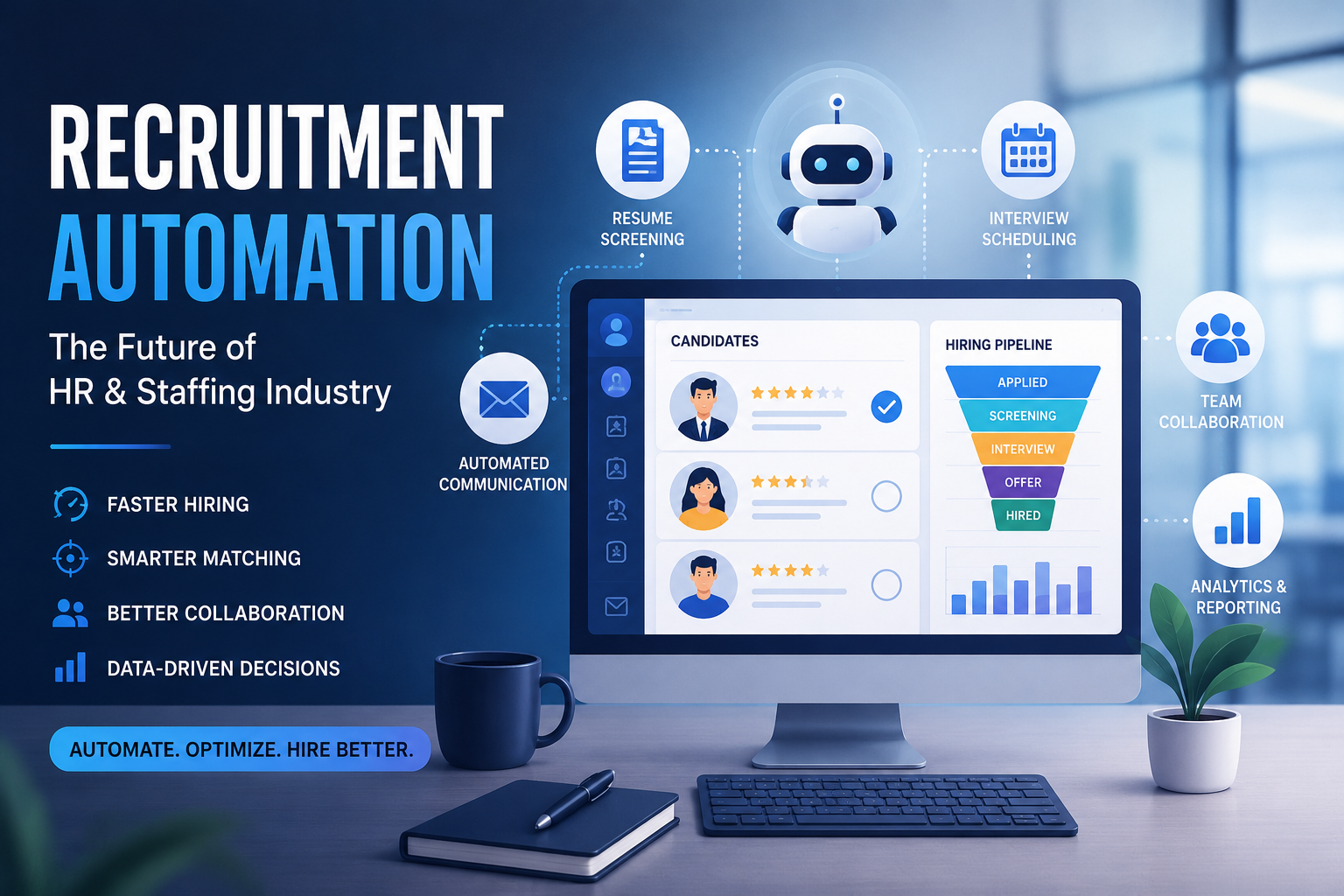
Recruitment Automation: The Future of HR & Staffing Industry
Introduction
The HR and staffing industry is evolving rapidly. As businesses continue to scale and hiring demands increase, traditional recruitment methods are becoming slower, less efficient, and difficult to manage. Manual candidate tracking, scattered communication, delayed follow-ups, and inefficient workflows often create operational bottlenecks for recruitment teams.
This is where recruitment automation is transforming the industry.
Modern businesses and recruitment firms are now adopting automation technologies, smart dashboards, applicant tracking systems, and AI-powered recruitment workflows to improve hiring efficiency, reduce repetitive tasks, and make better hiring decisions.
Recruitment automation is no longer a luxury it is becoming the future of the HR and staffing industry.
Recruitment Automation: The Future of HR & Staffing Industry
What Is Recruitment Automation?
Recruitment automation refers to the use of technology, software systems, and automated workflows to streamline recruitment operations and reduce manual dependency throughout the hiring process.
Instead of handling everything manually, businesses can automate processes such as:
- Candidate sourcing
- Resume screening
- Interview scheduling
- Follow-up communication
- Candidate tracking
- Reporting and analytics
- Team collaboration
- Client coordination
The objective is simple:
Improve efficiency, reduce delays, and help recruitment teams focus on hiring the right talent faster.
Why Traditional Recruitment Methods Are Failing
Many HR teams and staffing agencies still rely heavily on:
- Excel sheets
- Manual follow-ups
- Emails scattered across teams
- Unorganized candidate databases
- Delayed interview coordination
As hiring volumes grow, these methods create multiple challenges.
Common Recruitment Challenges
1. Manual Candidate Tracking
Managing hundreds of candidate profiles manually becomes difficult and time-consuming.
2. Delayed Follow-Ups
Missed calls, delayed emails, and poor communication negatively affect candidate experience.
3. Lack of Centralized Data
Without a centralized recruitment system, teams struggle to access accurate candidate information and hiring status.
4. Poor Team Coordination
Recruiters, HR managers, and clients often work on disconnected systems, causing communication gaps.
5. Slow Hiring Process
Manual workflows slow down decision-making and increase time-to-hire.
These challenges directly impact productivity, candidate quality, and business growth.
How Recruitment Automation Is Transforming HR Operations
Recruitment automation helps organizations streamline the entire hiring process through centralized and intelligent systems.
1. Faster Candidate Screening
Automated recruitment systems can quickly filter and organize resumes based on:
- Skills
- Experience
- Keywords
- Job requirements
This saves recruiters significant time and improves hiring efficiency.
2. Centralized Candidate Management
Modern recruitment CRM systems allow businesses to maintain a centralized candidate database where recruiters can:
- Track candidate progress
- Manage hiring stages
- Store interview feedback
- Access communication history
This improves visibility and operational coordination.
3. Automated Interview Scheduling
Scheduling interviews manually often leads to delays and confusion.
Recruitment automation tools simplify:
- Interview coordination
- Calendar management
- Candidate reminders
- Follow-up notifications
This improves both recruiter productivity and candidate experience.
4. Improved Team Collaboration
Recruitment automation systems help recruiters, HR teams, managers, and clients collaborate on a unified platform.
Teams can:
- Share updates
- Review profiles
- Track hiring progress
- Manage approvals
without relying on scattered communication channels.
5. Real-Time Analytics & Reporting
One of the biggest advantages of recruitment automation is data visibility.
Analytics dashboards help businesses monitor:
- Hiring performance
- Recruiter productivity
- Candidate pipeline
- Time-to-hire
- Source effectiveness
These insights improve hiring decisions and business planning.
Benefits of Recruitment Automation
Increased Productivity
Automation reduces repetitive administrative tasks, allowing recruiters to focus on strategic hiring activities.
Better Candidate Experience
Faster communication, timely updates, and organized hiring workflows improve the overall candidate experience.
Reduced Hiring Time
Automated systems significantly reduce delays in candidate screening, interview scheduling, and approvals.
Improved Data Management
Centralized recruitment systems help businesses organize candidate data efficiently and securely.
Scalability
As recruitment demands increase, automated systems help organizations scale hiring operations without operational chaos.
The Role of AI in Recruitment Automation
Artificial Intelligence is becoming an important part of modern recruitment systems.
AI-powered recruitment solutions can help with:
- Resume analysis
- Candidate matching
- Smart recommendations
- Automated communication
- Predictive hiring insights
AI helps recruitment teams make faster and smarter decisions while reducing manual effort.
However, technology should support recruiters — not replace human judgment entirely.
The best recruitment systems combine automation with human decision-making.
Why Recruitment Firms Need Custom CRM Systems
Every recruitment business operates differently.
Generic software often fails to match specific workflows and operational structures.
Custom recruitment CRM systems help businesses:
- Align workflows with internal processes
- Improve recruiter efficiency
- Centralize communication
- Create scalable recruitment ecosystems
This is why many modern staffing firms are moving towards customized recruitment automation solutions instead of relying on generic tools.
The Future of HR & Staffing Industry
The future of recruitment will be driven by:
- Automation
- AI integration
- Data-driven hiring
- Centralized recruitment systems
- Smart workflows
Businesses that continue relying on outdated manual processes will struggle to scale efficiently.
Organizations adopting recruitment automation early will gain:
- Faster hiring cycles
- Better operational efficiency
- Improved candidate experiences
- Stronger hiring decisions
Technology is no longer optional in recruitment
How Ksystematics Helps Recruitment Businesses
At Ksystematics, we help HR consultancies, recruitment agencies, and staffing firms streamline operations through smart automation and customized recruitment solutions.
Our solutions include:
- Recruitment CRM Systems
- Candidate Management Platforms
- Workflow Automation
- Interview Scheduling Systems
- Analytics Dashboards
- Team Collaboration Tools
- AI-Based Recruitment Solutions
We focus on building scalable systems aligned with your exact workflow requirements and business goals.
Conclusion
Recruitment automation is transforming the HR and staffing industry by improving efficiency, reducing manual work, and enabling smarter hiring processes.
As businesses continue to grow and hiring demands increase, automation will become one of the most important factors driving recruitment success.
Companies that invest in modern recruitment systems today will be better prepared for the future of hiring tomorrow.