

Blog
From Manual to Digital: How Ksystematics Transforms Business Operations

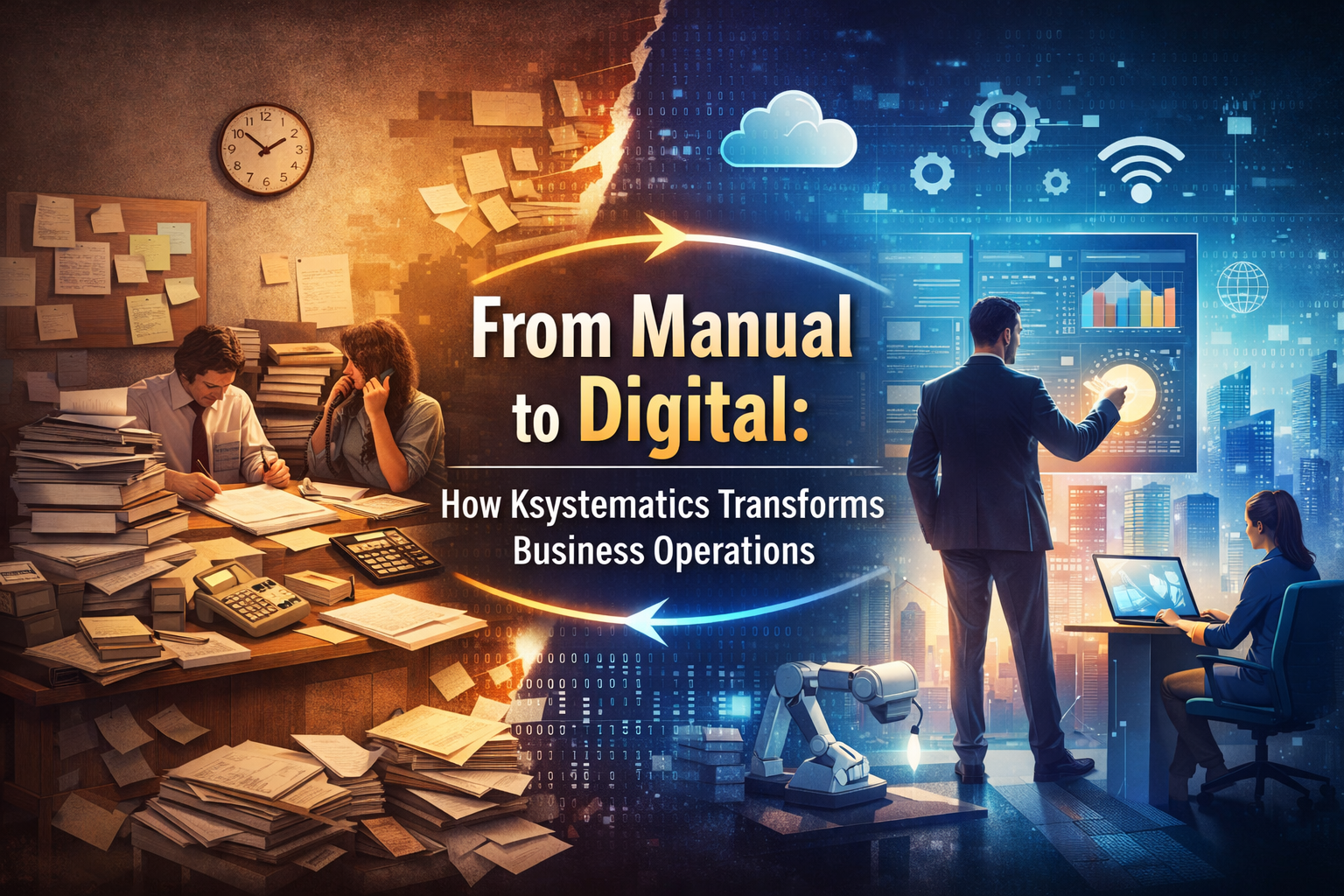
From Manual to Digital: How Ksystematics Transforms Business Operations
The Reality of Manual Business Operations Today
Many businesses still rely on manual processes to run their daily operations. Spreadsheets, paper records, WhatsApp messages, disconnected software tools, and verbal coordination are still common in small and mid sized companies. While these methods may work initially, they quickly become a major obstacle to growth. Manual operations slow down decision-making, increase errors, and create confusion across teams.
As businesses grow, the complexity of managing customers, leads, finances, employees, and vendors also increases. Without proper systems in place, business owners often find themselves spending more time fixing operational issues than focusing on strategy and growth. This is exactly where digital transformation for business operations becomes essential.

From Manual to Digital: How Ksystematics Transforms Business Operations
Why Manual Processes Limit Business Growth
Manual systems lack structure, transparency, and scalability. When data is scattered across different platforms or stored offline, it becomes difficult to track performance or identify bottlenecks. Teams work in silos, information is duplicated, and accountability is unclear.
Businesses using manual workflows often face delayed responses, missed opportunities, poor customer experience, and inaccurate reporting. Over time, these inefficiencies directly impact revenue and brand reputation. This is why business automation and digital process management are no longer optional they are necessary for survival in a competitive market.
What Does Digital Transformation Really Mean?
Digital transformation is not just about using software or moving data online. It is about redesigning business processes using technology so that operations become faster, smarter, and more efficient. True digital transformation connects people, processes, and data into one unified system.
When done correctly, digital transformation for growing businesses improves visibility, reduces manual effort, and enables data-driven decision-making. It allows business owners to gain full control over operations without increasing manpower or complexity.
The Gap Between Software and Business Needs
One of the biggest challenges businesses face is choosing the right technology. Many companies try off the shelf software solutions only to realize that these tools do not match their actual workflows. Generic software often forces businesses to change how they work instead of supporting how they operate.
This gap leads to low adoption, employee resistance, and wasted investment. That is why custom IT solutions for business operations deliver far better results. This is where Ksystematics plays a crucial role.
How Ksystematics Approaches Business Transformation
Ksystematics believes that technology should adapt to business needs, not the other way around. Instead of selling generic tools, the team focuses on understanding how a business actually works. Every process, pain point, and goal is carefully analyzed before designing a solution.
By following a structured approach, Ksystematics transforms manual business operations into smart digital systems that are easy to use, scalable, and aligned with long-term business goals.
Identifying Operational Bottlenecks Through Technology
Most business owners are aware that something is wrong with their operations, but they cannot clearly identify where the problem lies. Manual processes hide inefficiencies and make it difficult to measure performance.
Ksystematics begins by mapping existing workflows and identifying bottlenecks such as delays, duplication, and dependency on individuals. With process analysis and digital optimization, these issues are addressed systematically, resulting in smoother and faster operations.
Automating Repetitive Business Tasks
Repetitive tasks consume a significant amount of time and energy. Data entry, follow-ups, reporting, approvals, and coordination are all tasks that can be automated. Manual handling of these tasks not only slows teams down but also increases the risk of errors.
Ksystematics designs business automation systems that handle routine activities automatically. This frees up teams to focus on strategic and revenue-generating tasks while improving accuracy and consistency.
Centralizing Business Data for Better Control
One of the biggest advantages of digital transformation is data centralization. When all business data is stored in one system, decision-making becomes faster and more accurate. Teams no longer waste time searching for information or reconciling conflicting data.
With centralized business management systems, Ksystematics helps companies gain complete visibility into operations, finances, customers, and performance metrics all from a single dashboard.
Improving Customer Experience Through Digital Systems
Customer expectations have changed dramatically. Clients now expect quick responses, transparent communication, and professional interactions. Manual systems make it difficult to deliver a consistent customer experience.
By implementing digital customer management systems, Ksystematics ensures that every interaction is tracked, every follow-up is timely, and every customer feels valued. This directly improves satisfaction, trust, and retention.
Enhancing Team Productivity and Accountability
Manual operations often lead to confusion around responsibilities and performance. Without clear systems, it becomes difficult to track who is doing what and whether tasks are completed on time.
Digital systems introduce structure and accountability. With performance tracking and workflow management solutions, Ksystematics enables managers to monitor progress, assign responsibilities, and measure productivity without micromanagement.
Real-Time Reporting for Smarter Decisions
Delayed reporting is one of the biggest disadvantages of manual operations. By the time reports are prepared, the information is often outdated. This leads to reactive decision-making instead of proactive planning.
Ksystematics builds real-time reporting and analytics dashboards that provide instant insights into business performance. This empowers leadership to make informed decisions based on current data rather than assumptions.
Scalability Without Operational Chaos
Growth should not create chaos. Unfortunately, many businesses struggle when they scale because their manual processes cannot handle increased volume. More customers, more transactions, and more employees create operational pressure.
With scalable digital infrastructure for businesses, Ksystematics ensures that systems grow alongside the company. New users, processes, and features can be added without disrupting operations.
Security and Data Protection in Digital Systems
Manual data storage is vulnerable to loss, theft, and misuse. As businesses become more digital, data security becomes a top priority. Protecting sensitive information is essential for compliance and trust.
Ksystematics implements secure IT systems with role-based access and data protection, ensuring that business data remains safe while being easily accessible to authorized users.
Why Custom Solutions Outperform Generic Software
Every business is unique. Processes, team structures, and goals vary widely across industries. Generic software rarely fits perfectly and often creates more problems than it solves.
Ksystematics specializes in custom software development for business operations, delivering solutions that align exactly with how a company works. This leads to higher adoption, better efficiency, and long-term value.
Supporting Digital Transformation Across Industries
Whether it is real estate, services, manufacturing, education, or healthcare, manual challenges exist everywhere. Ksystematics has experience across multiple sectors, allowing them to design solutions that address industry-specific requirements.
By providing industry-focused IT and automation solutions, Ksystematics helps businesses modernize operations without losing control or flexibility.
Reducing Costs Through Smart Digital Systems
Contrary to common belief, digital transformation reduces costs in the long run. Automation reduces manpower dependency, errors reduce rework, and better planning improves resource utilization.
With cost-effective digital transformation strategies, Ksystematics helps businesses increase profitability while improving operational efficiency.
Building a Future-Ready Business Foundation
Technology is evolving rapidly. Businesses that rely on outdated systems struggle to adapt to new trends, regulations, and customer expectations. Future readiness is no longer optional.
Ksystematics builds future-ready business systems that can adapt to new requirements and integrate emerging technologies without major restructuring.
Why Businesses Choose Ksystematics as Their IT Partner
Ksystematics is not just a service provider it is a long-term technology partner. The team focuses on understanding business goals and delivering measurable outcomes rather than just software.
With expertise in business process automation, custom software development, and digital transformation, Ksystematics helps companies move from confusion to clarity and from manual to digital with confidence.
Long-Term Impact of Digital Transformation
The impact of digital transformation goes beyond operational efficiency. It improves decision-making, enhances brand perception, and creates a strong foundation for sustainable growth.
Businesses that adopt smart digital systems for operations gain a competitive edge and are better prepared for future challenges.
Why Digital-First Businesses Respond Faster to Market Changes
Markets change faster than ever. Customer behavior, competition, regulations, and technology evolve continuously. Businesses operating on manual systems struggle to adapt because changes require more effort, more people, and more time. Decision-making becomes slow, and opportunities are often missed.
With digital-first business operations, organizations gain the agility needed to respond quickly. Ksystematics designs systems that allow businesses to modify workflows, update processes, and access real-time data instantly. This flexibility helps companies stay competitive and proactive instead of reactive.
How Digital Systems Improve Cross-Team Collaboration
In manual setups, teams often work in isolation. Sales, operations, accounts, and management use different tools and data sources, leading to miscommunication and delays. Collaboration becomes dependent on meetings and follow-ups instead of systems.
Ksystematics creates integrated digital business systems where all teams operate on the same platform. Information flows seamlessly across departments, reducing friction and improving coordination. This leads to faster execution and better overall performance.
The Role of Automation in Leadership Decision-Making
Leadership decisions require accurate and timely information. Manual reporting systems often provide outdated or incomplete data, forcing leaders to rely on assumptions rather than insights.
With automation-driven business reporting, Ksystematics enables leaders to access dashboards that show real-time performance metrics. This empowers decision-makers to identify trends, spot issues early, and plan strategically with confidence.
Eliminating Dependency on Individuals Through Digital Processes
Many businesses become overly dependent on specific individuals who hold critical knowledge or control key processes. This creates risk, especially when employees leave or are unavailable.
Digital systems document workflows, standardize processes, and store data centrally. Through process digitization and documentation, Ksystematics helps businesses reduce dependency on individuals and build resilient operations that function smoothly regardless of staff changes.
How Digital Transformation Supports Remote and Hybrid Work
The modern workplace is no longer confined to physical offices. Remote and hybrid work models require systems that allow teams to collaborate and operate from anywhere.
Ksystematics builds cloud-based digital business systems that enable secure access to data and workflows from any location. This ensures continuity, productivity, and flexibility without compromising control or security.
Improving Accuracy and Compliance Through Digital Controls
Manual processes increase the risk of errors, inconsistencies, and compliance issues. Missing records, incorrect entries, and lack of audit trails can lead to serious problems.
With digitally controlled business workflows, Ksystematics introduces validation checks, approval hierarchies, and audit logs. This improves accuracy and ensures compliance with internal policies and external regulations.
Transforming Customer Follow-Ups Into Systematic Processes
Customer follow-ups are often inconsistent in manual setups. Missed calls, forgotten emails, and delayed responses negatively impact customer trust and conversion rates.
Ksystematics implements automated follow-up systems for business operations, ensuring that every customer interaction is timely and tracked. This systematic approach improves engagement and increases the likelihood of closing deals.
Measuring Performance Instead of Guessing Results
Without digital systems, performance measurement is often subjective and delayed. Managers struggle to assess productivity, efficiency, and ROI accurately.
With performance measurement tools built into digital systems, Ksystematics enables businesses to track KPIs in real time. This data-driven approach removes guesswork and supports continuous improvement.
Scaling Operations Without Increasing Complexity
Growth often brings complexity. More customers, more transactions, and more employees can overwhelm manual systems. Businesses end up adding layers of management instead of improving systems.
Through scalable digital transformation frameworks, Ksystematics ensures that operations remain streamlined even as volume increases. Growth becomes manageable rather than chaotic.
Aligning Technology With Long Term Business Vision
Technology investments fail when they are disconnected from business strategy. Many companies adopt tools without a clear roadmap, leading to fragmented systems.
Ksystematics aligns IT strategy with business goals, ensuring that digital transformation supports long-term vision rather than short-term fixes. This strategic alignment maximizes ROI and sustainability.
Building Transparency Across Business Operations
Transparency is critical for trust and accountability. Manual systems often hide inefficiencies and make it difficult to track progress.
Digital systems bring visibility into every aspect of operations. With transparent digital business management systems, Ksystematics helps leaders understand exactly what is happening across the organization at any time.
Supporting Continuous Improvement Through Data Insights
Digital transformation is not a one-time project; it is an ongoing journey. Continuous improvement requires constant feedback and analysis.
Ksystematics builds systems that support continuous optimization through data insights, enabling businesses to refine processes, improve performance, and adapt to changing needs.
Why Digital Transformation Is a Competitive Advantage
In competitive markets, efficiency and speed matter. Businesses that operate digitally can deliver better experiences, reduce costs, and innovate faster than those relying on manual processes.
By enabling technology-driven business operations, Ksystematics helps companies gain a sustainable competitive advantage that is difficult to replicate.
How Ksystematics Ensures Smooth Adoption of Digital Systems
Technology adoption often fails due to poor usability and lack of training. Employees resist systems they find complex or irrelevant.
Ksystematics focuses on user-friendly digital solutions and structured onboarding, ensuring high adoption and minimal disruption. Systems are designed to support teams, not burden them.
Preparing Businesses for Future Technologies
Emerging technologies like AI, advanced analytics, and intelligent automation will further transform business operations. Businesses with weak digital foundations will struggle to adopt these innovations.
Ksystematics builds future-ready digital architectures that can integrate new technologies easily, ensuring long-term relevance and adaptability.
Final Perspective: Digital Transformation as a Growth Enabler
Digital transformation is not about replacing people with technology; it is about empowering people with better systems. Businesses that embrace this shift gain clarity, control, and confidence.
By partnering with Ksystematics, organizations can successfully move from manual operations to digital excellence. From manual to digital, Ksystematics transforms business operations by turning complexity into simplicity and effort into efficiency.